You’re halfway through dinner when something crashes near the restaurant entrance.
A chair falls. Someone shouts. People at the next table stand up, blocking your view. Your youngest grabs your sleeve while your spouse looks toward the front door.
You can’t tell exactly what happened. You can see that people are moving away from it.
Your chair is pushed against a wall. A server’s tray stand narrows the aisle. You remember passing another door on the way to the restroom, but you don’t know where it leads.
You carry a firearm. You practice regularly. Right now, the questions demanding your attention are where you can go, whether your family can follow, and what’s happening beyond the people in front of you.
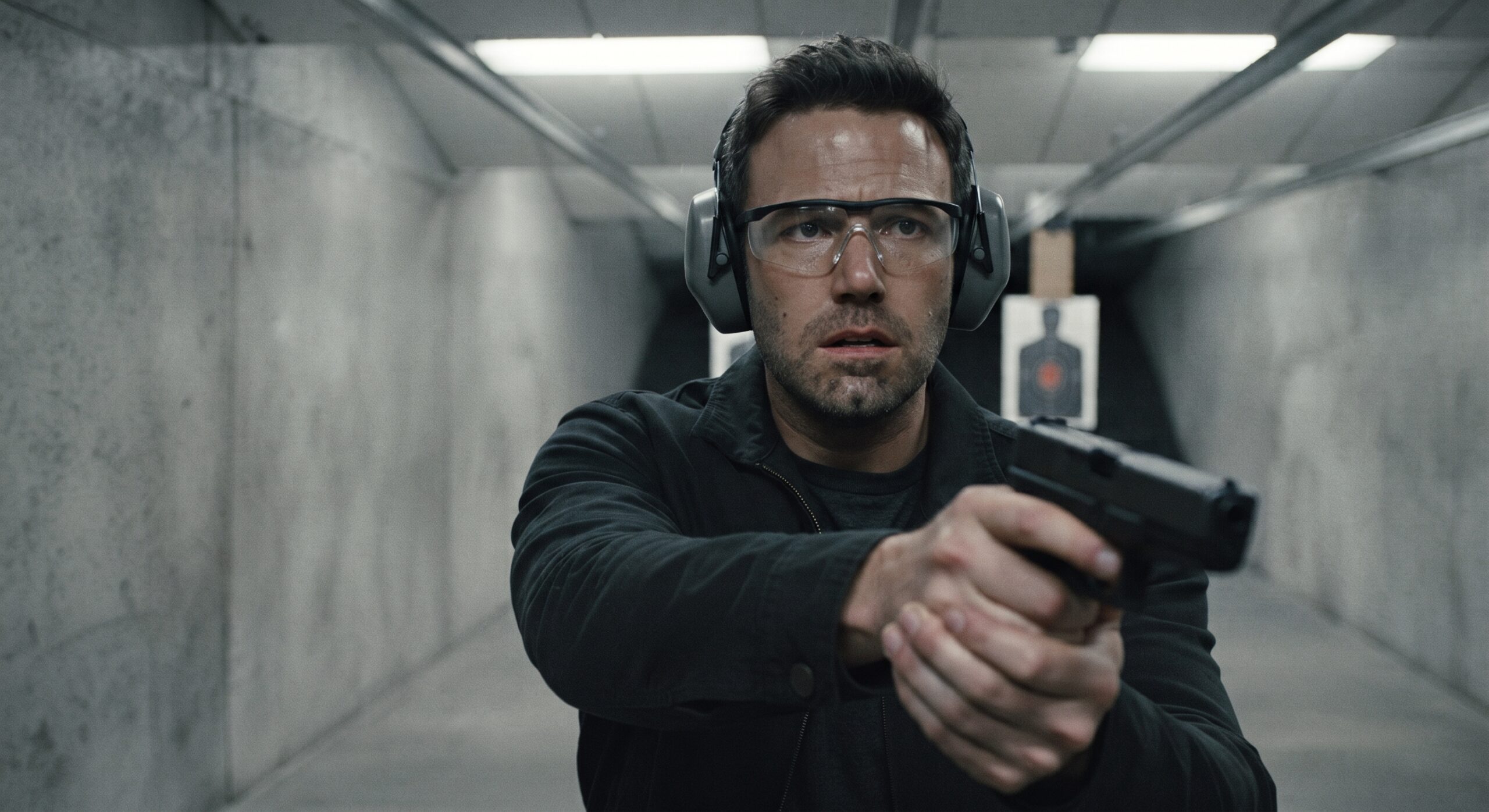
At the range, someone has already decided where you stand, where the target is, and which direction is safe. Outside it, some of those decisions may belong to you.
That doesn’t diminish the value of shooting practice. It identifies the additional preparation you need.
Start by examining what your usual practice covers. Then look at the places you visit, the people you accompany, and the decisions you would need to make before moving.
Find the Decisions Your Range Practice Leaves Out
A well-run range gives you a controlled place to develop safe handling and shooting skills. You can repeat an exercise, observe the result, and make a useful comparison next time.
Those conditions help you learn. Keep using them.
But consider what a typical shooting lane supplies before you fire a shot. The target is identified. Its location is known. The shooting direction and backstop are established. Other shooters operate under shared rules.
You generally arrive expecting to shoot, wearing suitable footwear and carrying the equipment you intend to use. You can put your bag down, adjust your hearing protection, and begin when ready.
An ordinary emergency may offer none of that preparation.
Make two columns in your training notebook: “What I practice” and “What the range provides.”
In the first, list the skills you actually work on. In the second, list conditions you rarely have to evaluate yourself: an unobstructed floor, known target, clear instructions, or nobody depending on you for help.
This exercise reveals gaps without dismissing the work you’ve done.
For example, you might be comfortable handling the pistol but have never discussed how to communicate with your spouse during an evacuation. Or you may shoot accurately while standing but have difficulty rising from a low chair.
Choose one gap to address first. “Become better prepared” is too broad. “Find out how our workplace evacuates someone who cannot use the stairs” gives you a concrete next action.
Know Where You’re Going and Why
Before thinking about how to move, identify the purpose.
You might need to leave a dangerous area, reach a place where you can shelter, or assist someone who cannot leave independently. Those objectives require different decisions.
Movement by itself does not establish progress. Crossing a room without knowing where you’re going can leave you with fewer options.
Use three questions:
- Where am I trying to get?
- What do I know about the route?
- What would make me change that choice?
You won’t always have complete information. The point is to make decisions from what you can reasonably observe rather than treating motion as automatically useful.
Also separate moving from firing a gun. You may need to move without handling a firearm at all. Deciding whether firearm use is justified and safe involves additional considerations. Carrying one doesn’t turn every frightening event into a shooting problem.
For an active-shooter event, the FBI advises having an escape route in mind, leaving belongings, and helping others escape when possible. If evacuation isn’t possible, its guidance addresses hiding and preventing access; fighting is a last resort when life is in imminent danger. Those options depend on the situation. FBI
Avoid adopting a universal instruction such as “always run outside” or “always stay where you are.” Either could send you toward danger under the wrong circumstances.
In training, ask instructors to explain the objective of an exercise before discussing technique. You should understand what successful movement accomplishes, not merely where the instructor wants your feet.
Check the Routes in Places You Actually Visit
Choose three ordinary environments: your workplace, a store you use regularly, and a restaurant or other public venue.
During normal visits, pay attention to the routes available to you. You don’t need to walk around looking for threats. Notice the physical features you would otherwise overlook.
Where are the marked exits? Does the route from your usual location involve stairs? Are aisles narrow? Does a door lead directly outside, or into another part of the building?
At work, read the emergency plan and ask the person responsible for it to explain anything unclear. In public venues, follow posted information and ask staff about accessible exits when necessary. Don’t enter restricted areas or test emergency doors.
Look beyond the doorway. An exit might open onto steps, a loading area, or a fenced passage. Where you emerge matters, particularly if someone with you has limited mobility.
Notice temporary changes. A display, delivery, or rearranged seating can make a familiar path different. Report blocked emergency exits to the appropriate staff rather than accepting them as an inconvenience.
For each place, write a few practical observations afterward:
“Usual entrance involves stairs. Need to ask about the accessible exit.”
“Restaurant aisle is narrow when chairs are occupied.”
“Office evacuation instructions don’t explain our department’s assistance arrangements.”
Turn each unresolved issue into a question you can answer.
Avoid calling a large object “protection” just because it blocks your view. Furniture and partitions differ in construction, and hiding someone from sight is not the same as stopping gunfire. Appearance alone doesn’t establish either a safe route or a protective position.
Make the Plan Fit Your Body, Clothes, and Equipment
Your emergency plan needs to work with the person you are on an ordinary day.
Think about your regular footwear, clothing, and physical limitations. Are you often in shoes that make stairs awkward? Does a stiff knee make getting up from the floor difficult? Do you need glasses to read signs across a room?
These details affect available choices.
Check ordinary movements in a safe setting without a firearm. Can you get out of your usual chair comfortably? Can you negotiate the steps you regularly use? Is the route practical with your normal mobility aid?
There is no reason to turn this into an exhausting test. You’re identifying constraints, not proving toughness.
If something hurts or feels unstable, discuss appropriate activity and limitations with a qualified healthcare professional. Bring relevant limitations to a prospective instructor before enrolling in physical training.
Clothing deserves the same practical attention. A class conducted in athletic shoes and loose clothing may teach useful skills, but you should discuss how those lessons apply to the clothes you normally wear.
Equipment must also stay secure during ordinary movement. A properly fitted holster should support and retain the pistol and protect the trigger. Have fit concerns evaluated safely by a knowledgeable professional.
Write down one physical limitation and one equipment issue worth resolving. Perhaps you need clearer evacuation arrangements involving stairs, or a holster assessment before taking a class.
Preparation improves when you address a real constraint. It doesn’t require pretending the constraint will disappear during an emergency.
Account for Full Hands and People Who Need Help
At the range, you can arrange your belongings before beginning.
Elsewhere, you may have a coffee, grocery bags, a stroller, a phone, or a child holding your hand. That changes what you can do immediately.
Look at a typical outing and identify what occupies your hands. Then separate replaceable belongings from responsibilities involving people.
Decide beforehand that shopping bags or a restaurant bill will not hold you in a dangerous place. The FBI’s evacuation guidance specifically advises leaving belongings behind. Reaching safety should not depend on first gathering everything you brought. FBI
Dependents require more thought.
If you push a stroller, consider whether familiar exits accommodate it. If you carry a small child, your ability to open a heavy door or use a handrail changes. Discuss these practical demands with the other adults who accompany you.
You can assess routine accessibility during a normal outing without staging an emergency. Notice which doors require assistance and which paths become awkward when crowded.
Avoid making firearm handling the automatic answer to uncertainty. A firearm in your hand creates safety responsibilities while also occupying a hand you may need for another task.
Any training involving a firearm and competing physical tasks belongs in a suitable, supervised environment. Don’t experiment around family members.
For your own planning, finish this sentence: “When we’re out together, the person most likely to need my immediate assistance is ____.”
Then identify what that assistance actually involves. Helping someone hear an instruction is different from helping them negotiate a step.
Agree on Who Helps Whom Before You Need to Move
Ask your spouse or regular companion what they would expect from you during an evacuation.
You may discover conflicting assumptions. One person expects to gather both children. The other assumes each adult will take responsibility for one. Neither has considered what happens if they’re in different parts of the building.
Discuss those questions calmly before an emergency.
Agree on who normally assists each dependent, while recognizing that the nearest available adult may need to act when the usual arrangement is impossible. Avoid a plan that requires people to cross danger simply to restore the preferred assignment.
Use short, specific communication. “Come with me through this door” conveys more than “Go.” If you are uncertain, don’t disguise that uncertainty with a confident-sounding instruction.
For children, choose age-appropriate expectations and ask them to explain those expectations back to you. Keep the discussion reassuring and practical. They should know how to seek help and what to do if separated.
Include people with disabilities in decisions about their own assistance. Ask what helps, what creates difficulty, and what equipment needs to remain with them. Don’t assume grabbing someone or moving their mobility aid is helpful.
CDC recommends an individual emergency plan that addresses the person’s particular needs, rather than relying on an assumption that responders will be immediately available. CDC
For familiar venues, discuss a reasonable reunification arrangement away from the danger. Make clear that nobody should reenter an unsafe area to search for someone. Share the missing person’s last known location with responders.
Finish by asking: “What changes if only one adult is present?” A plan that depends on an absent person needs revision.
Expect the Crowd to Change Your Options
People will not necessarily move in the direction you expect.
Someone may stop abruptly, turn back for a companion, or be unable to understand what is being shouted. A child may freeze. Another person may be trying to help someone you cannot see.
Keep that uncertainty in your planning. A route that looks clear now may change as people move into it.
During ordinary visits, notice where congestion develops. A narrow aisle between occupied chairs presents a different problem from the same aisle in an empty room. An accessible exit can still be difficult to reach through a crowd.
Your objective is to recognize those constraints early enough to consider alternatives. It is not to predict exactly how everyone will behave.
Firearm safety becomes especially demanding when the surroundings change. NSSF’s safety guidance emphasizes controlling muzzle direction, accounting for what lies beyond the target, and maintaining control even if you stumble. Those responsibilities remain while other people move around you. NSSF
A range provides a designated shooting direction and backstop. A crowded room does not supply an equivalent by default. This is one reason shooting proficiency alone cannot answer every emergency decision.
When evaluating training, ask whether bystanders and uncertain information affect the exercise. If every scenario presents an obvious target and rewards an immediate shot, it offers limited practice in deciding whether shooting is appropriate.
You also need opportunities to recognize that the available information is insufficient, that a route has become unsafe, or that helping someone leave is the useful action.
Ask What a Class Teaches Before You Pay
Look for a course whose description addresses judgment, environmental awareness, and safe movement at your experience level.
Read the prerequisites before paying. A demanding course may assume skills you have not yet developed. Starting with an appropriate class gives you a better opportunity to learn.
Ask the provider concrete questions:
- What decisions will students practice?
- How are safe handling and movement assessed?
- Can an exercise end successfully without firing?
- How are physical limitations accommodated?
- What supervision and safety procedures are used?
- What feedback follows each exercise?
You want clear answers about the learning process.
Experience and credentials can help you evaluate an instructor, but also consider whether they teach ordinary armed citizens in circumstances relevant to yours. Someone preparing you for recreational shooting, civilian emergencies, or professional duties may be addressing different responsibilities.
Tell the instructor what you want to improve. “I’m comfortable on a static range, but I need help evaluating movement and maintaining safe handling when conditions change” is a useful starting point.
Explain mobility concerns and relevant equipment issues before the class. Ask what happens if you need to pause or cannot safely complete an activity.
The provider should also be able to describe its emergency procedures and how it handles unsafe behavior.
Keep live-fire movement practice within an authorized facility and under suitable supervision. Don’t improvise a moving exercise at a range that permits only stationary shooting.
Leave the booking conversation knowing what the class teaches, what it expects you to know already, and how it will keep the instruction appropriate to your ability.
Test Your Assumptions in Supervised Scenarios
Simulations can introduce decisions that a paper target doesn’t provide. Their value depends on how they’re designed and reviewed.
A useful exercise might require you to respond to a blocked exit, an unclear instruction, or a companion who needs help. It should give the instructor something specific to assess.
Ask how the facility controls access to real firearms and ammunition during non-live-fire exercises. Training devices, protective equipment, participant checks, and stop procedures should be explained before the activity begins.
Do not create an improvised role-play with firearms at home or stage a surprise emergency in public.
Some decision work needs no weapon at all. You can discuss a venue’s evacuation plan with staff, review your family’s communication arrangements, or walk an approved route at a normal pace.
In a supervised exercise, ask what information is available to you and explain afterward what you believed was happening. The instructor can then distinguish a reasonable choice made with limited information from a missed observation.
Change one condition at a time during early learning. If the normal exit becomes unavailable, how does your decision change? If your companion cannot use stairs, what information do you need?
You’re testing whether the plan adapts.
The discussion afterward matters as much as the activity. Ask the instructor to identify one decision you handled well, one assumption that caused trouble, and one thing to work on next.
An exercise that leaves you startled but unable to explain what you learned has not given you much to practice.
Measure Your Decisions Alongside Your Shooting
Keep your shooting records, but add a separate record for judgment and safe handling.
After appropriate training, write down whether you recognized the problem, chose a clear objective, and noticed conditions that affected your options. Include whether your communication made sense to the person receiving it.
Record safety issues plainly. A good score on the target cannot cancel unsafe handling elsewhere in an exercise.
Use a short review:
- What did I know when I made the decision?
- What was I trying to accomplish?
- What information or obstacle did I miss?
- Did my actions account for companions and bystanders?
- What specific change will I make?
Avoid judging every decision solely by what became known afterward. You cannot act on information you didn’t have. You can evaluate whether you overlooked information that was available or failed to reconsider when circumstances changed.
Also record physical difficulties. If a task was unsafe for your knee, balance, or mobility, the next step may be an accommodation or a different plan. Repeating it harder does not automatically solve the problem.
Ask for observable progress. Perhaps you communicate more clearly, recognize inaccessible routes sooner, or maintain safe handling throughout a supervised exercise.
Those improvements may be less photogenic than a tight group. They still address the decisions an ordinary shooting lane rarely requires.
Turn the Gaps Into Tasks With Deadlines
Choose a few practical actions you can complete rather than compiling a long list you won’t revisit.
Fill in the following:
- Skills my normal range practice develops: ____.
- Decisions the range usually makes for me: ____.
- Three everyday places I will review: ____.
- Exit or accessibility questions I need answered: ____.
- People I regularly accompany and assistance they may need: ____.
- Responsibilities we need to discuss: ____.
- Clothing, equipment, or physical limitations affecting movement: ____.
- A training gap I want qualified instruction to address: ____.
- Questions I will ask the course provider: ____.
- How I will evaluate improvement: ____.
- My next action and completion date: ____.
Start with the easiest unresolved item. Ask about the workplace evacuation plan. Discuss responsibilities with your spouse. Contact an instructor about an appropriate class.
Keep practicing at the range. The safety habits and shooting skills developed there remain important.
But return to the restaurant for a moment. The aisle is crowded, your child is holding your sleeve, and you don’t yet understand everything happening near the entrance. Before you can make a useful decision, you need to account for the place and the people around you.
Your range has a firing line because somebody planned the environment before you arrived. Preparing for an emergency means learning to recognize which of those decisions are now yours.